




Ceramic Machining: Essential Techniques and Processes for Precise Components
Ceramics show up everywhere—from pottery and kitchenware to electronics and medical implants. Making them involves several steps. Machining is what gets them to their final shape. We'll walk through the basics.
Understanding Machining
Machining is just cutting away material to get the shape you want. It started with metals, but works just as well for ceramics, plastics, wood—you name it. When you're machining ceramics, a raw or fired piece gets trimmed down until it hits the right shape and size. Ceramics are hard and brittle. You have to be careful. Cracks and chips are easy to get if you're not.
Overview of Ceramic Product Fabrication
Making ceramic parts usually goes something like this.
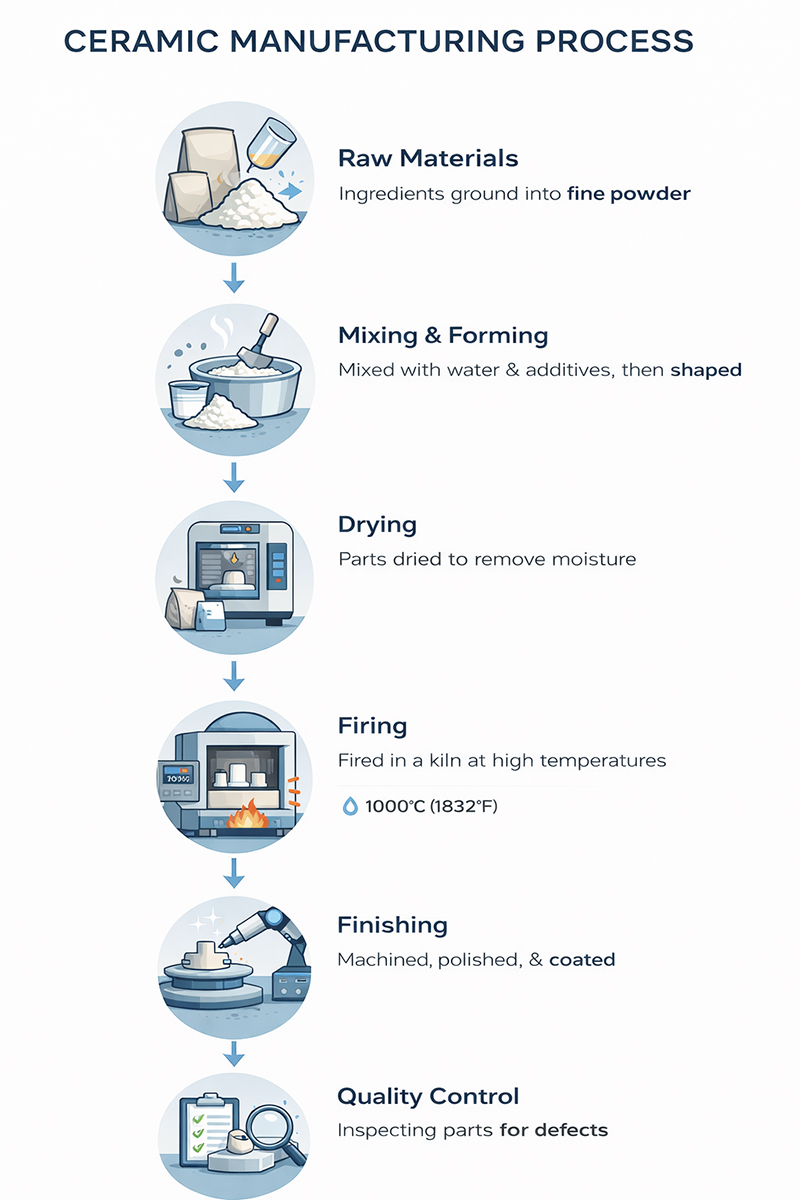
It starts with raw materials. What you put in determines how the final product behaves.
Those materials get ground into a fine powder. Then they're mixed with water and additives to make a slurry or paste. From there, it's formed into shape. Slip casting, injection molding, extrusion, or dry pressing—it depends on the part.
After forming, the part gets dried. Controlled air, microwave, or heat chambers pull out the excess moisture. Once it's dry, it's ready for the kiln.
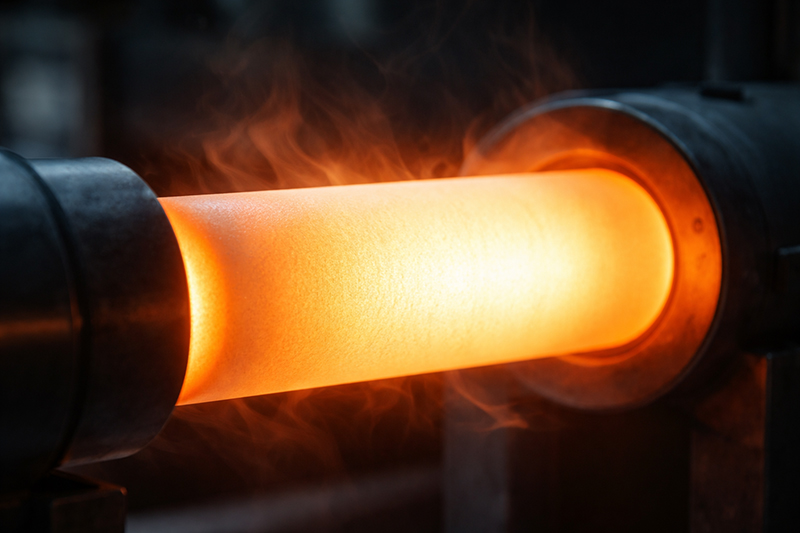
Firing—sintering, if you want to get technical—is what solidifies the ceramic. Typical temperatures run around 1000°C (1832°F) or higher. A lot of ceramics go through two rounds of firing. The first is called bisque firing. It makes the clay durable but still porous enough to take a glaze. The second firing bonds that glaze to the surface. That locks in the color and finish.
After firing, it's on to finishing. This is where machining, polishing, and coating operations bring the part to its final dimensions and surface quality. Then, quality control does a last pass to catch any defective parts before they ship.
Methods Used in Ceramic Machining
Among all these steps, machining is one of the most critical. It's also often the most expensive. Depending on the part, machining can eat up 50% to 90% of total production costs. It's not just about how fast you can remove material. With ceramics, avoiding cracks and edge damage is just as important.
Grinding
Grinding is the go-to for a lot of ceramic work. You use rotating abrasive wheels—usually diamond or CBN (cubic boron nitride)—to take material off. It's great for smoothing surfaces and hitting tight tolerances. Surface grinding, cylindrical grinding, internal grinding—each has its place. It depends on the part's shape and the finish you're after.
Milling
Milling uses a rotary tool to cut away material. These days, it's almost always done on a CNC machine. These days, it's almost always done on a CNC machine—automated, precise, repeatable. The process usually goes in stages. Rough machining removes the bulk. Then semi-finishing. Then a final pass to nail the dimensions and surface.
Different techniques come into play depending on what you need. Face milling handles flat surfaces. Internal milling does slots or hollows. Then there's chamfer milling, thread milling, helical milling. Whatever the part calls for.
CNC Machining
CNC machining is really the backbone of modern ceramic work. You start with a CAD file. That file gets converted into code. The machine follows those instructions to cut the part. For hard, brittle ceramics, this kind of precision makes a huge difference. For hard, brittle ceramics, this kind of precision makes a huge difference: fewer cracks, better fit, less scrap.
Green Machining vs. Full-Density Machining
One thing that doesn't always get spelled out clearly is the difference between machining ceramics before and after firing.
Green machining happens on raw, unfired ceramics. The material is still soft enough that standard steel or carbide tools work fine. It's faster, cheaper, and easier on tools. But the part itself is fragile. You have to handle it carefully.
Full-density machining happens after firing, when the ceramic is fully hard. This is where things get tricky. You need diamond tools or CBN. The process is slower. The upside is that what you see is what you get. No shrinkage left to deal with. The final dimensions are stable.
A lot of shops do a mix. Rough it out in the green state, then finish after firing. Best of both worlds.
Conclusion
Ceramic machining takes a mix of the right tools, good process control, and a feel for how the material behaves. Whether you're grinding, milling, or running a CNC, the basics are the same. Work within the material's limits. Watch out for cracks. Aim for consistency.
If you're working with ceramics, understanding when to machine green versus fully fired can save you a lot of time and money. At the end of the day, that's what it's about—getting the part right without driving up the cost.
We hope this gives you a solid handle on the fundamentals. When you're ready to put them to work, Advanced Ceramic Materials (ACM) has the supplies and quality materials you need.
Frequently Asked Questions
What is green machining?
Green machining removes material from ceramic parts before they're fired. Standard steel or stainless steel tools work well here. The ceramic isn't fully hardened yet, so it's easier on tools. But the piece itself is fragile.
What is full-density ceramic machining?
This refers to machining ceramics after they've been fully fired. It's more challenging. It requires diamond-tipped or CBN tools to handle the hardness.
Can ceramics be machined?
Yes. Even though ceramics are hard and brittle, proper techniques make it possible to produce precise parts. That means using durable tools—tungsten carbide, diamond, or CBN—and controlling feed rates.
What are the different types of ceramics?
Ceramics can be grouped into structural, refractory, electrical, magnetic, and abrasive types. Common examples include porcelain, alumina, stoneware, ball clay, earthenware, silicon carbide, and zirconia.
What role does a milling grinder play?
This term can be a little confusing. In some contexts, a milling grinder is a machine that breaks solid materials into smaller pieces—like crushing raw ceramic powders. In precision machining, it's often used to refer to CNC milling or grinding machines that finish fired ceramic parts. The meaning depends on where you are in the production process.

{{item.content}}
LEVE A REPLY
{{item.children[0].content}}
{{item.content}}
LEAVE A REPLY
SUBSCRIBE OUR NEWSLETTER
- Oxide, Sulfide, or Phosphate? A Supplier's Guide to Solid-State Electrolyte Ceramics
- Alumina vs. Zirconia Ceramics: The Engineering Blueprint for Material Selection
- Case Study: Sub-Millimeter Sapphire Tubes for High Voltage Discharge Applications
- Alumina Powder (Al2O3): A Technical Guide to Grades, Properties, and Applications
- The Melting Behavior of Ceramics: A Technical Guide for High-Temperature Applications
 Silicon Carbide - Ultra-High Temperature Ceramics for Extreme Environments
This article explains how ultra-high temperature ceramics, especially silicon carbide, serve robust and reliable performance in conditions above 1,400°C. It covers basic properties, everyday applications, and why these materials matter in industrial settings.
READ MORE >
Silicon Carbide - Ultra-High Temperature Ceramics for Extreme Environments
This article explains how ultra-high temperature ceramics, especially silicon carbide, serve robust and reliable performance in conditions above 1,400°C. It covers basic properties, everyday applications, and why these materials matter in industrial settings.
READ MORE >