





Alumina vs. Zirconia Ceramics: The Engineering Blueprint for Material Selection
When your application demands performance beyond the limits of industrial plastics and metals, advanced technical ceramics are the logical next step. However, a common crossroads for design engineers and procurement managers is choosing between Alumina (Al₂O₃) and Zirconia (ZrO₂). Both resist wear and handle heat well. But picking the wrong one means early failure or wasted budget.
This article compares their physical properties, real-world trade-offs, and cost-benefit realities to help you select the right ceramic for your operating environment.
1. Alumina vs. Zirconia – Core Traits
Alumina (Al₂O₃)
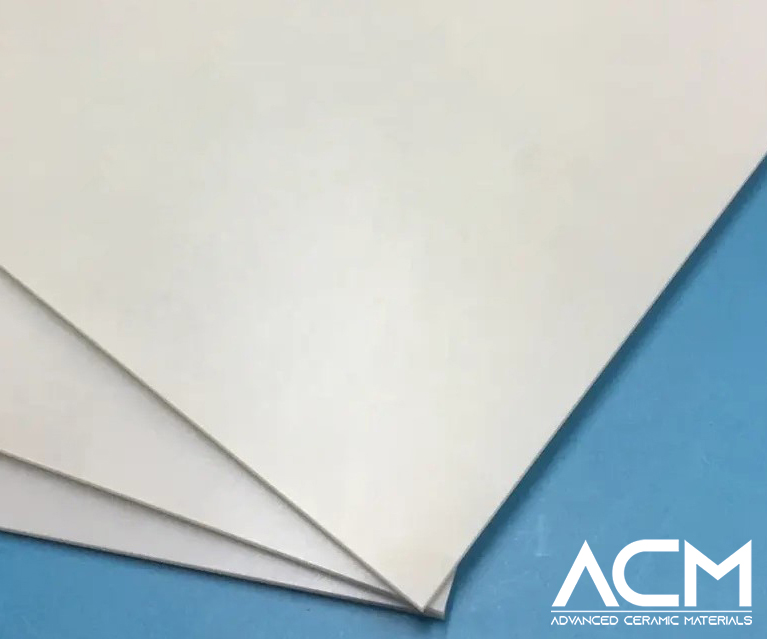
Alumina is the most widely used advanced ceramic. It is favored for its high hardness, good thermal conductivity, and strong electrical insulation. Its mature manufacturing ecosystems provide a predictable, cost-effective baseline for industrial components.
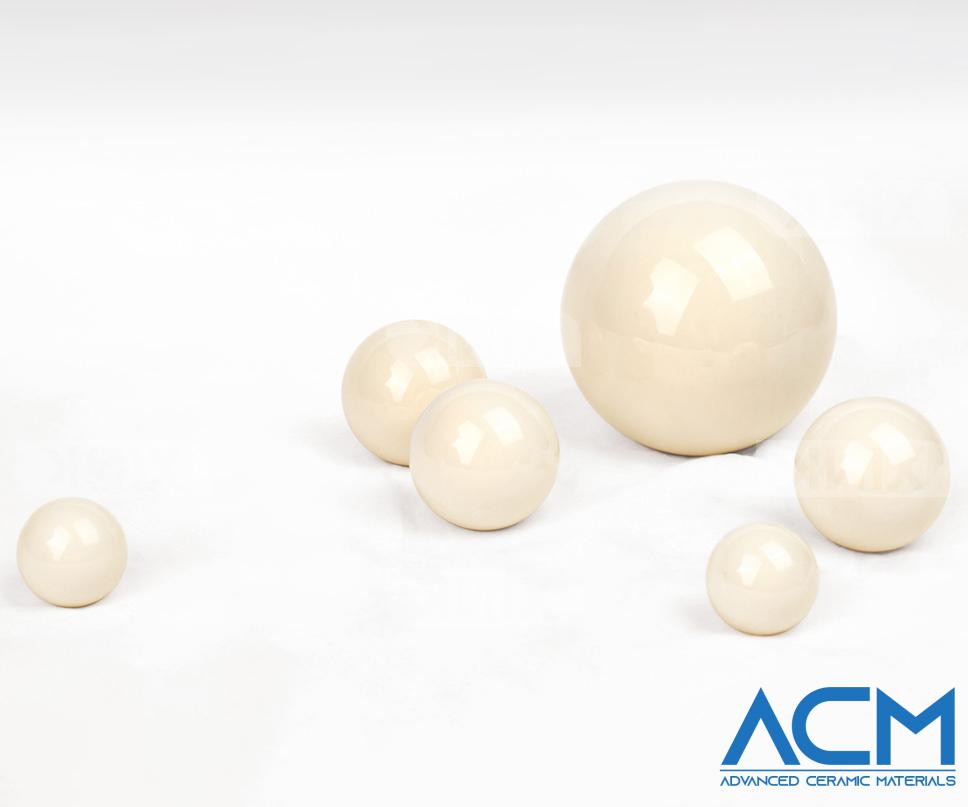
Zirconia (ZrO₂ / YSZ)
Yttria-Stabilized Zirconia (YSZ) is often referred to as "ceramic steel." It overcomes the traditional brittleness of ceramics by utilizing a unique transformation-toughening mechanism. It delivers high tensile strength, high fracture toughness, and excellent corrosion resistance. However, this performance comes with a baseline raw material cost that is roughly 2 to 3 times higher than that of alumina.
2. Key Differences at a Glance
To help you quickly review the structural differences, we have mapped their core properties side-by-side:
| Property | Alumina (Al₂O₃, 99.7%) | Zirconia (ZrO₂, YSZ) |
| Density (g/cm³) | 3.7 - 3.95 | 5.68 - 6.05 |
| Hardness (Mohs) | 9 | 8.5 |
| Tensile Strength (MPa) | 78 | 330 |
| Compressive Strength (MPa) | 2100 - 2600 | 2000 - 2500 |
| Thermal Conductivity (W/m·K) | 24 - 29 | 2 - 3 |
| Volume Resistivity (Ω·cm) | >10¹⁴ | >10¹⁰ |
| Surface Finish Potential (Ra) | 0.2 - 0.4 µm | 0.02 µm |
| Max. Structural Temp (°C) | 1750°C | 1200°C * |
*Engineering Note on Temperature: Zirconia melts much higher, but don't be fooled. Above 1200°C, its phase structure destabilizes. Alumina holds on until 1750°C.
3. Applications – What Works Where
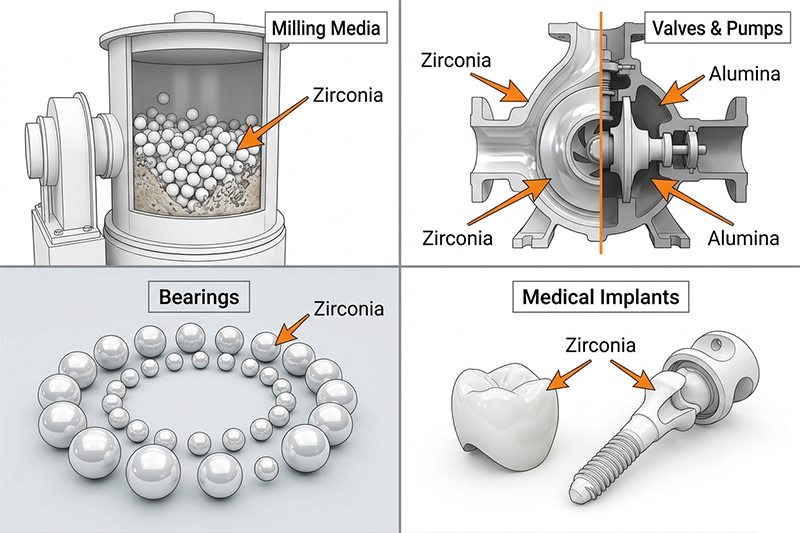
3.1 Grinding & Milling Media → Zirconia
Because of its high density and high fracture toughness, Zirconia grinding balls deliver higher kinetic energy during milling. They resist chipping and cracking, which helps prevent batch contamination and extends the lifespan of the media compared to alumina.
3.2 Industrial Valves & Pumps → It Depends on the Fluid
-
Choose Zirconia for aggressive, high-pressure, slurry-heavy chemicals or abrasive mining flows. The smooth surface finish (Ra 0.02 µm) prevents seal wear.
-
Choose Alumina for general fluid handling, standard instrumentation, and high-volume, cost-sensitive plumbing components.
3.3 Precision Bearing Balls → Zirconia
Zirconia's low surface roughness and high tensile strength fit high-speed, low-lubrication precision bearings. It resists deformation under sudden shock loads where standard ceramics might crack.
3.4 Medical & Dental Implants → Zirconia
With a thermal expansion coefficient close to steel and high biocompatibility, Zirconia is widely used for dental crowns and joint replacements. Its opaque white color also matches natural teeth.
4. What About Cost?
When designing for scalability, the financial footprint matters just as much as the physical properties.
- Raw Materials: Zirconia powder processing requires chemical stabilizers (like Yttria), keeping raw costs at least double that of high-purity alumina.
- Machining & Finishing: Green-state machining (before firing) requires precision, but diamond-grinding sintered Zirconia takes longer due to its toughness. This leads to higher tool wear and longer cycle times, which increases the price per part.
- Total Cost of Ownership (TCO): If a cheaper Alumina valve seat fails every 3 months, replacing it with a Zirconia valve seat that lasts 3 years will reduce your maintenance downtime and lower your overall operating costs.
5. Quick Selection Guide
Before sending your designs to production, run your operating environment through this quick check:
-
Is it a long-term, high-temperature application (>1200°C)? Specify Alumina.
-
Will the component experience rapid, severe thermal shock? Specify Zirconia (Alumina is more prone to thermal shock cracking).
-
Is the component subjected to high bending loads, vibrations, or sudden impacts? Specify Zirconia.
-
Are you dealing with extreme acids, high-velocity slurries, or sensitive medical environments? Specify Zirconia.
-
Is the part primarily used for electrical insulation, heat dissipation, or under a tight budget? Specify Alumina.
Conclusion
While Alumina dominates in cost, thermal performance, and electrical insulation, Zirconia offers distinct advantages in structural strength, toughness, and wear life.
The best way to balance performance and cost is through optimized geometric design and precise material grading.
Not sure which grade of Alumina or Zirconia fits your custom blueprint? Our engineering team is ready to analyze your drawings, review your application parameters, and provide a manufacturability assessment.

{{item.content}}
LEVE A REPLY
{{item.children[0].content}}
{{item.content}}
LEAVE A REPLY
SUBSCRIBE OUR NEWSLETTER
- Oxide, Sulfide, or Phosphate? A Supplier's Guide to Solid-State Electrolyte Ceramics
- Case Study: Sub-Millimeter Sapphire Tubes for High Voltage Discharge Applications
- Alumina Powder (Al2O3): A Technical Guide to Grades, Properties, and Applications
- Ceramic Machining: Essential Techniques and Processes for Precise Components
- The Melting Behavior of Ceramics: A Technical Guide for High-Temperature Applications
 The Melting Behavior of Ceramics: A Technical Guide for High-Temperature Applications
This technical guide reviews how advanced ceramics melt. It gives key basics to help you pick materials for high-heat processes. It covers uses from furnace construction to semiconductor manufacturing.
READ MORE >
The Melting Behavior of Ceramics: A Technical Guide for High-Temperature Applications
This technical guide reviews how advanced ceramics melt. It gives key basics to help you pick materials for high-heat processes. It covers uses from furnace construction to semiconductor manufacturing.
READ MORE >
 Alumina Powder (Al2O3): A Technical Guide to Grades, Properties, and Applications
How to choose alumina powder purity from 92% to 99.99%. ACM guide covers decision tree, properties, ZTA, and application tables for engineers.
READ MORE >
Alumina Powder (Al2O3): A Technical Guide to Grades, Properties, and Applications
How to choose alumina powder purity from 92% to 99.99%. ACM guide covers decision tree, properties, ZTA, and application tables for engineers.
READ MORE >
 Oxide, Sulfide, or Phosphate? A Supplier's Guide to Solid-State Electrolyte Ceramics
Oxide, sulfide, or phosphate? A practical guide to solid-state electrolyte ceramics from a supplier who handles them daily. Compare LLZO, LATP, and LGPS on conductivity, processing, stability, and real-world viability.
READ MORE >
Oxide, Sulfide, or Phosphate? A Supplier's Guide to Solid-State Electrolyte Ceramics
Oxide, sulfide, or phosphate? A practical guide to solid-state electrolyte ceramics from a supplier who handles them daily. Compare LLZO, LATP, and LGPS on conductivity, processing, stability, and real-world viability.
READ MORE >