




Oxide, Sulfide, or Phosphate? A Supplier's Guide to Solid-State Electrolyte Ceramics
Ask a room full of battery researchers which solid electrolyte they use, and you will get a room full of different answers. Oxide people will tell you sulfides are too unstable to handle. Sulfide people will say oxides cannot match their conductivity. And the phosphate crowd—well, they are quietly getting their materials into production while everyone else argues.
The truth is, every family has a place. But you need to know what you are signing up for
At Advanced Ceramic Materials (ACM), we have supplied LLZO, LATP, LGPS, and various phosphate powders to dozens of R&D teams over the past few years. We have seen what works and what does not—not in academic papers, but in actual lab furnaces and pilot lines. Here is what we have learned.
Oxides: Stable, Reliable, and a Pain to Sinter
Let us start with oxides, because this is what most people think of when they hear "ceramic electrolyte." LLZO, LLTO, LATP—the alphabet soup of lithium-conducting oxides.
The good news is stability. Drop an oxide electrolyte in air, and nothing happens. (Well, LLZO does absorb CO₂ and moisture over time, forming Li₂CO₃ on the surface, so do not leave it out for weeks. But compared to sulfides, it is practically bulletproof.) Electrochemically, most oxides hold up well above 4 V, which makes them compatible with high-voltage cathodes. LLZO in particular has a reduction potential of only 0.05 V versus Li/Li⁺, meaning it forms a passivating interface with lithium metal rather than decomposing continuously. That is a big deal if you are targeting a lithium anode.
The bad news is processing. Oxides need heat—lots of it. Sintering temperatures above 900°C are typical, and if you do not hit the right temperature window, your ionic conductivity drops by an order of magnitude. Grain boundary resistance is another headache. In LLTO and LATP, lithium ions move much faster through the bulk than across grain boundaries—sometimes five orders of magnitude faster. You can try doping, you can try reducing grain boundary width, but you cannot fully eliminate it.
Then there is the brittleness. Oxides have Young's moduli in the 100–200 GPa range. That is great for dendrite suppression in theory, but in practice, it means you cannot get good solid-solid contact with your electrodes. The contact points are tiny, and as the electrode expands and contracts during cycling, those points crack and lose contact.
Who actually uses oxides? Labs that can afford high-temperature furnaces and researchers focused on stability over conductivity. LLZO remains the only ceramic that genuinely works with lithium metal anodes, so if that is your goal, oxides are your best bet. Just be prepared to debug your sintering process.
Sulfides: Fast, Fragile, and Fussy
If oxides are the tortoise, sulfides are the hare. LGPS hits 12 mS/cm at room temperature—that is liquid-like conductivity. Some newer compositions reportedly go even higher. For anyone chasing high power density, sulfides are the obvious first look.
The reason is structural. Sulfur is larger than oxygen, so the lithium transport channels in sulfides are wider. The Li⁺-anion interaction is weaker. Ions move faster. Simple as that. Plus, sulfides are mechanically softer than oxides—you can densify them by cold pressing at room temperature. No 1000°C furnaces. No lengthy sintering schedules. That alone makes them attractive for manufacturing.
But here is the catch: sulfides are chemically fragile. They react with moisture to release H₂S—toxic, corrosive, and a major safety hazard. This means dry rooms, gloveboxes, and strict atmospheric controls throughout processing. The equipment cost is higher, the handling is slower, and your operators need training.
The electrochemical window is also narrow. The intrinsic stability window of LGPS is only about 1.7–2.1 V versus Li/Li⁺. Beyond that, the electrolyte decomposes. The decomposition products sometimes passivate the interface, giving the appearance of stability, but those products are often poor ionic conductors. Interfacial resistance creeps up over time. And if your sulfide contains Ge⁴⁺ (like LGPS), the reduction products can include electronically conductive Li-Ge alloys. That is a short circuit waiting to happen.
Who actually uses sulfides? Anyone who absolutely needs the highest conductivity and is willing to build the infrastructure to handle them safely. EV battery programs with dry-room facilities. Well-funded research groups. If you are in a standard academic lab with a basic glovebox, think twice before ordering kilograms of LGPS powder.
Phosphates: The Compromise That Actually Works
Phosphates do not get the attention oxides and sulfides do. They are not the fastest, not the most stable, not the most exotic. But they might be the most practical.
Take LATP. Room-temperature conductivity of 0.3–1 mS/cm—lower than sulfides, but comparable to many oxides. Electrochemical window of 4.31 V versus Li/Li⁺—higher than LLZO or LGPS, making it genuinely compatible with high-voltage cathodes. And it is stable in ambient air. No H₂S risk. No glovebox requirement. You can process it like a normal ceramic powder.
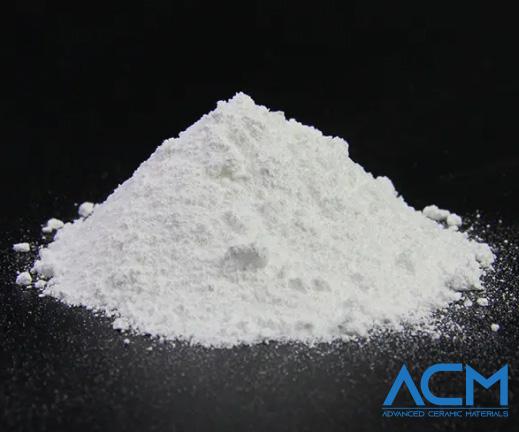
Lithium Aluminum Titanium Phosphate (LATP) Powder
LZP, a newer phosphate variant recently commercialized in China, claims similar conductivity (0.15–10 mS/cm depending on grade) with better thermal stability (decomposes above 600°C). Particle sizes below 0.4 μm make it suitable for thin-film applications.
The downsides? LATP contains Ti⁴⁺, which reacts with lithium metal. The reduction products are mixed-conducting—they conduct both ions and electrons—so the interface grows continuously, and impedance rises with each cycle. For lithium metal anodes, phosphates are not the answer. For graphite or silicon anodes, they are fine.
And like oxides, phosphates are brittle. High-temperature sintering is still required. You are not cold-pressing LATP into a dense electrolyte disc.
Who actually uses phosphates? Manufacturers who want something that works without heroics. LATP offers a balanced profile—decent conductivity, excellent voltage stability, no moisture nightmares—and it can be produced on standard ceramic processing equipment. LZP is showing up in energy storage applications where cost matters as much as performance.
So, Where Does That Leave You?
Here is a quick cheat sheet:
| Feature | Oxides (LLZO, LLTO) | Sulfides (LGPS, LPSC) | Phosphates (LATP, LZP) |
|---|---|---|---|
| Ionic conductivity | 0.1–1 mS/cm | 1–12 mS/cm | 0.15–1 mS/cm |
| Air stability | Moderate (LLZO needs care) | Poor (H₂S risk) | Good to excellent |
| Sintering temperature | >900°C | Room temp / cold press | >900°C |
| Mechanical property | Brittle, high modulus | Soft, deformable | Brittle, high modulus |
| Works with Li metal? | Yes (LLZO) | Not really | No |
| Works with high-voltage cathodes? | Yes | Not really | Yes |
| Manufacturing complexity | Moderate | High | Moderate |
-
Need the highest conductivity and have a dry room? Sulfides are your answer. Just budget for the infrastructure and be prepared for interface issues.
-
Want lithium metal compatibility and can handle high-temperature processing? LLZO is the only ceramic that genuinely delivers.
-
Prefer something that works in air, handles high voltages, and does not require a furnace that glows white-hot? Look at phosphates—LATP or LZP.
One thing I have learned from years of supplying these materials: the powder matters as much as the chemistry. Phase purity, particle size distribution, surface area—these parameters affect sintering behavior, final density, and conductivity more than many researchers expect. Two batches of LLZO from different suppliers, both claiming "99.9% purity," can sinter very differently if their particle morphologies are not the same.
That is where we come in. If you already know which material you need, we can provide it with the consistency your process requires. If you are still deciding, we can talk through the options—no pressure, just practical advice from someone who handles these powders every day.
References
[1] NSF-PAR. (n.d.). Inorganic Solid-State Electrolytes. https://par.nsf.gov/servlets/purl/10484730
[2] Journal of Electroceramics. (2017). Table 1: Total Li conductivity, activation energy, electrochemical window and phase equilibria for various representative solid electrolytes. Springer. https://link.springer.com/article/10.1007/s10832-017-0091-0/tables/1
[3] Forschungszentrum Jülich. (2025). Solid-State Batteries. https://www.fz-juelich.de/en/iet/iet-1/our-research/focus-topics/batteries/solid-state
[4] Nano-Micro Letters. (2023). Table 3: CPEs incorporated with active fillers. Springer. https://rd.springer.com/article/10.1007/s40820-023-01051-3/tables/3
[5] IAEA INIS. (n.d.). Solid-State Electrolytes: Transport Mechanisms and Interface Properties. https://inis.iaea.org/records/3y6ck-pr838
[6] Jarrold, G., & Manthiram, A. (2025). Supplementary Tables 1-2: Electrolyte Strategies for Practically Viable All-Solid-State Lithium-Sulfur Batteries. Communications Materials. https://static-content.springer.com/esm/art%3A10.1038%2Fs43246-025-00960-7/MediaObjects/43246_2025_960_MOESM1_ESM.pdf

{{item.content}}
LEVE A REPLY
{{item.children[0].content}}
{{item.content}}
LEAVE A REPLY
SUBSCRIBE OUR NEWSLETTER
- Alumina vs. Zirconia Ceramics: The Engineering Blueprint for Material Selection
- Case Study: Sub-Millimeter Sapphire Tubes for High Voltage Discharge Applications
- Alumina Powder (Al2O3): A Technical Guide to Grades, Properties, and Applications
- Ceramic Machining: Essential Techniques and Processes for Precise Components
- The Melting Behavior of Ceramics: A Technical Guide for High-Temperature Applications
 The Melting Behavior of Ceramics: A Technical Guide for High-Temperature Applications
This technical guide reviews how advanced ceramics melt. It gives key basics to help you pick materials for high-heat processes. It covers uses from furnace construction to semiconductor manufacturing.
READ MORE >
The Melting Behavior of Ceramics: A Technical Guide for High-Temperature Applications
This technical guide reviews how advanced ceramics melt. It gives key basics to help you pick materials for high-heat processes. It covers uses from furnace construction to semiconductor manufacturing.
READ MORE >