Do you have any questions? Email Us
[email protected]







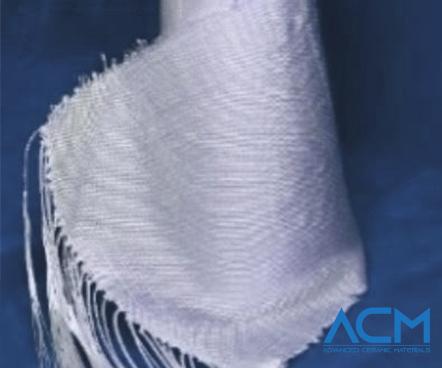
BN9144 Boron Nitride (BN) Fiber Cloth – High-Temperature Thermal Insulation & Dielectric Fabric
- Catalog No. BN9144
- Chemical Formula BN (Boron Nitride)
- Form Fiber Cloth (Fabric)
- Temperature Resistance ℃ Up to 1600°C (Inert Atmosphere)
Inquiry
BN9144 Boron Nitride (BN) Fiber Cloth – High-Temperature Thermal Insulation & Dielectric Fabric
Complete Technical Specifications
| Parameter | Specification |
|---|---|
| Chemical Formula | BN (Boron Nitride) |
| Weave Types | Plain Weave / Twill Weave / Double Weft |
| Thickness | 250-300 μm / 350-400 μm / 400-500 μm |
| Areal Density | 200-250 g/m² / 180-220 g/m² / 325-350 g/m² |
| Electrical Conductivity | 10⁻⁹ ~ 10⁻¹² S/cm |
| Dielectric Constant | ≤ 4.5 |
| Dielectric Loss | ≤ 5 × 10⁻³ |
| Temperature Resistance | Up to 1600°C (Inert Atmosphere) |
Technical Overview
1. The Boron Nitride Fiber Cloth Advantage
Boron Nitride Fiber Cloth features a unique hexagonal lattice structure that provides an exceptional combination of properties: high-temperature stability (up to 1600°C in inert atmospheres), outstanding chemical inertness, low dielectric constant, excellent thermal shock resistance, and natural lubricity. Unlike carbon-based fabrics, BN does not oxidize readily and maintains its insulating properties even at extreme temperatures. The woven fabric format offers flexibility and ease of handling while preserving the inherent advantages of BN fibers.
2. Primary Applications
- Aerospace & Defense: Thermal insulation for turbine blades, engine components, spacecraft structures, and re-entry vehicle heat shields requiring lightweight, high-temperature stability.
- Semiconductor Manufacturing: Insulation components in high-temperature furnaces, diffusion furnaces, epitaxial reactors, and plasma systems where purity and chemical inertness are critical.
- High-Temperature Industrial Equipment: Thermal insulation in furnaces, kilns, and heat treatment systems to manage extreme heat conditions.
- Chemical Processing: Protective lining and filtration media in corrosive environments requiring resistance to acids, alkalis, and molten metals.
- Advanced Electronics: Dielectric layers and electrical insulation substrates for high-temperature electronic applications.
- Protective Wear: Lightweight, heat-resistant fabric for protective clothing in high-temperature industrial operations.
3. Key Material Properties
- Thermal Stability: Maintains structural integrity up to 1600°C in inert atmospheres, with good oxidation resistance in air.
- Electrical Insulation: Low dielectric constant (≤4.5) and low dielectric loss (≤5×10⁻³) make it an excellent high-frequency insulator.
- Chemical Inertness: Resistant to most acids, alkalis, molten metals, and slags, ensuring durability in corrosive environments.
- Mechanical Flexibility: Can be cut, draped, and formed to fit complex shapes while maintaining fiber integrity.
- Lightweight: Low areal density (180-350 g/m²) enables weight reduction in aerospace and transportation applications.
- Low Thermal Expansion: Minimal dimensional changes during temperature cycling, reducing thermal stress.
Weave Pattern Options
- Plain Weave: Simple over-under pattern offering good stability and uniformity for general applications.
- Twill Weave: Diagonal pattern providing better drapeability and conformability to curved surfaces.
- Double Weft: Enhanced density and mechanical strength for more demanding structural applications.
Quality Assurance
- Purity Control: High-purity raw materials with strict impurity limits for demanding semiconductor and aerospace applications.
- Fiber Alignment: Consistent fiber alignment and uniform thickness maintained through advanced weaving processes.
- Thermal Testing: Verification of temperature resistance and thermal stability through controlled high-temperature testing.
- Dielectric Testing: Dielectric constant and loss measurements confirm electrical insulation performance.
- Dimensional Inspection: Uniform density, thickness, and areal density verified for each batch.
- Standards Compliance: Meets ISO 9001 standards with material traceability and certificates of conformity available.
Handling & Storage
- Handle with clean, dry gloves to prevent contamination of fibers.
- Store in sealed containers or protective bags to safeguard from moisture and dust.
- Avoid excessive bending or twisting to maintain fiber alignment and structural integrity.
- Use controlled cutting methods when working with large pieces.
- Keep unopened vacuum-sealed pouches sealed until needed to maintain cloth purity.
Request a Quote
-
Attachment (Optional)
No file chosen
Related Products

Tel : (949) 407-8904
Address : 1940 E Deere Ave #100 Santa Ana, CA 92705 U.S.A.
Main Products

Useful Links
Featured Posts