Do you have any questions? Email Us
[email protected]







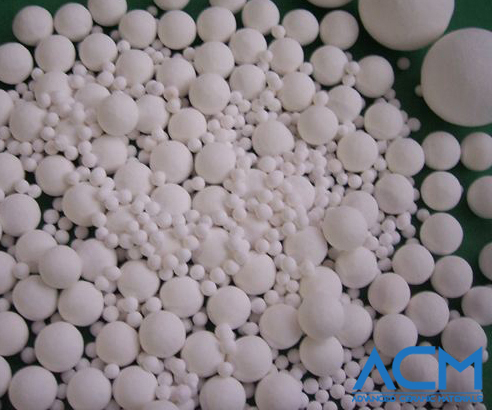
RP3341 Alumina Ceramic Ball (Inert Ball)
- Catalog No. RP3341
- Purity 17-23% / 23-30% / 40-75% / 85-97% / 99%
- Shape Sphere
- Material Alumina Ceramic
- Size 3mm - 50mm (Custom sizes available)
Datasheet
Inquiry
RP3341 Alumina Ceramic Ball (Inert Ball)
Product Overview
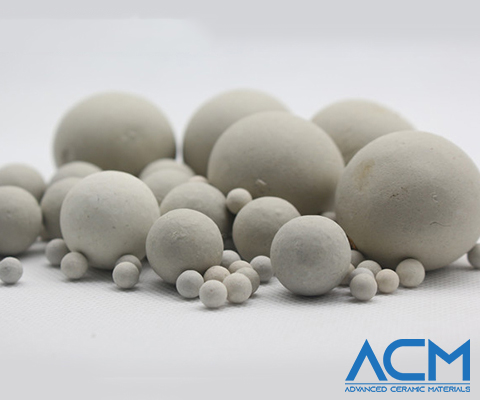
RP3341 inert alumina ceramic balls are engineered to serve as catalyst bed support, tower packing, and cover material in industrial reactors. Available in a range of alumina contents from 17% to 99%, they provide the chemical inertness, mechanical strength, and thermal stability required in petrochemical, fertilizer, natural gas, and environmental protection applications. Their inert nature ensures they will not react with process fluids or catalysts, making them ideal for sensitive chemical processes.
Primary Functions:
- Support and protect low-strength active catalysts
- Distribute gas or liquid flow evenly across the reactor bed
- Cover and secure catalyst layers
- Serve as heat transfer media in certain processes
Material Grades & Properties
We offer five grades of inert alumina ceramic balls to match different operating conditions and performance requirements.
| Property | Unit | Economy Grade | Medium Grade | High Grade | Premium Grade | Ultra-Pure Grade |
|---|---|---|---|---|---|---|
| Al₂O₃ Content | % | 17-23 | 23-30 | 40-75 | 85-97 | ≥99 |
| Al₂O₃+SiO₂ | % | >93 | >92 | >93 | >94 | >99 |
| Fe₂O₃ | % | <1.0 | <1.0 | <1.0 | <1.0 | <0.2 |
| Bulk Density | g/cm³ | 2.3-2.4 | 2.3-2.4 | 2.6-2.9 | 3.2-3.4 | 3.2-3.6 |
| Water Absorption | % | <0.5 | <0.5 | <1.0 | <2.0 | <0.5 |
| Max Operating Temp | ℃ | 980 | 980 | 1450 | 1580 | 1650 |
| Moh's Hardness | - | >6.5 | >7 | >7 | >7.5 | >9 |
Note: 99% ultra-pure grade features minimal SiO₂ and Fe₂O₃, making it ideal for applications where leached contaminants could poison catalysts or coat downstream equipment.
Crush Strength by Size (99% Grade)
| Diameter | Crush Strength (kg/particle) | Crush Strength (kN/particle) | Tolerance |
|---|---|---|---|
| 3mm (1/8") | >200 | >2.0 | ±1.0mm |
| 6mm (1/4") | >450 | >4.5 | ±1.0mm |
| 10mm (3/8") | >560 | >5.6 | ±1.5mm |
| 13mm (1/2") | >870 | >8.7 | ±1.5mm |
| 19mm (3/4") | >1200 | >12.0 | ±2.0mm |
| 25mm (1") | >1600 | >16.0 | ±2.0mm |
| 38mm (1.5") | >2300 | >23.0 | ±2.0mm |
| 50mm (2") | >3400 | >34.0 | ±2.5mm |
Crush strength values vary by grade. Contact us for grade-specific data.
Alumina Ceramic Ball (Inert Ball) Applications
RP3341 inert alumina ceramic balls are used across a range of industries:
Petrochemical – As inert bed support in reformers, isomerization units, and hydrotreaters. Also used as tower packing in distillation columns.
Fertilizer – Support media in ammonia plants, particularly in secondary reformers and high-temperature shift reactors. Also used in sulfur recovery units.
Natural Gas – In adsorbent driers for gas dehydration, support for molecular sieves, and amine treatment units.
Chemical Processing – Packing in acid recovery towers, support for oxidation catalysts, and protective layers in fixed-bed reactors.
Environmental – Support for VOC oxidation catalysts and packing in biofiltration systems.
Industrial – Heat storage media, grinding media (99% grade), and abrasive blasting applications.
Grade Selection Guide
Choose the right grade based on your operating conditions:
- Low-temperature, non-critical service (below 980°C) – Economy or Medium Grade
- High-temperature service (980°C to 1450°C) – High Grade
- Very high-temperature service (1450°C to 1580°C) – Premium Grade
- Ultra-pure or silica-sensitive processes – Ultra-Pure Grade (99%)
For size selection, smaller diameters (3-13mm) are typically used for catalyst support and even distribution, while larger diameters (19-50mm) are better suited for tower packing and high flow rate applications.
To avoid thermal shock, maximum heating and cooling rates should not exceed 5°C per minute. Rapid temperature cycling should be avoided, especially at high temperatures.
Alumina Ceramic Ball (Inert Ball) Packaging
Our Alumina Ceramic Ball (Inert Ball) is carefully handled during storage and transportation to preserve the quality of our product in its original condition.
Woven bag packaging; 25 kg/bag, Ton bag packaging: 1500KG/bag.
Frequently Asked Questions
Q: What is the difference between inert balls and catalyst?
A: Inert balls do not participate in chemical reactions. They serve as physical support for the active catalyst bed, protect catalyst layers, and help distribute gas or liquid flow evenly.
Q: Can these balls be used in high-pressure reactors?
A: Yes. Our high-grade and ultra-pure grades are designed to withstand high-pressure conditions. The crush strength data can help you determine suitability for your specific pressure requirements.
Q: What is the typical lifespan of inert alumina balls?
A: Under normal operating conditions, they can last several years. Actual lifespan depends on operating temperature, pressure cycling, and chemical exposure.
Q: Are these balls suitable for grinding applications?
A: The 99% ultra-pure grade, with its high hardness and low abrasion, is suitable for use as grinding media. Other grades are primarily designed for catalyst support and tower packing.
Q: Do you offer custom sizes?
A: Yes, we can produce custom diameters to meet your reactor specifications. Please contact us with your requirements.
Q: How should I clean contaminated balls?
A: For reusable applications: rinse with appropriate solvent to remove process residues, gently brush with soft bristles if needed, rinse thoroughly with clean water, and air dry before reuse.
 Preview
 Download

Request a Quote
-
Attachment (Optional)
No file chosen
Related Products

Tel : (949) 407-8904
Address : 1940 E Deere Ave #100 Santa Ana, CA 92705 U.S.A.
Main Products

Useful Links
Featured Posts